DripJobs Customers Are Building Rival CRMs. Is That Legal?
By Christine James, Editor · November 9, 2026
A painting contractor signs up for a CRM, uses it every day for a year, then opens an AI coding tool and asks it to build the same thing. The new app has the same pipeline, the same follow-up steps, sometimes the same screens. While it's in beta, the contractor keeps paying for the original.
That is the situation DripJobs says it now faces. Copying features is usually legal. Copying code, or breaking a contract you agreed to, usually isn't. Most vendors have more room than they think to decide who they serve.
Key facts
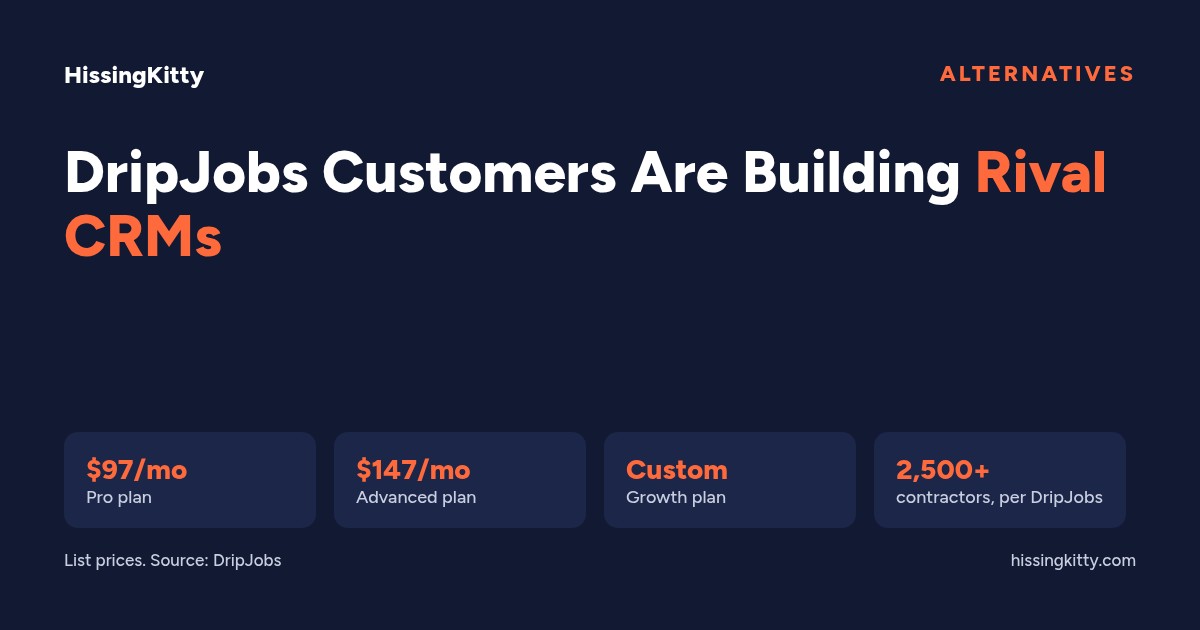
- DripJobs is a CRM and follow-up tool for painting and home service contractors, and says it serves 2,500+ contractors.
- Its Pro plan is $97 a month and Advanced is $147 a month, each with 1 admin user; Growth is custom priced.
- On Nov 9, 2026, cofounder Tanner Mullen said some customers are building rival CRMs that copy DripJobs' screens and flow.
- US copyright law does not protect ideas, procedures or methods of operation (17 U.S.C. 102(b)).
- In Google v. Oracle (2021), the Supreme Court found Google's copying of 11,500 lines of Java interface code was fair use.
What Is DripJobs?
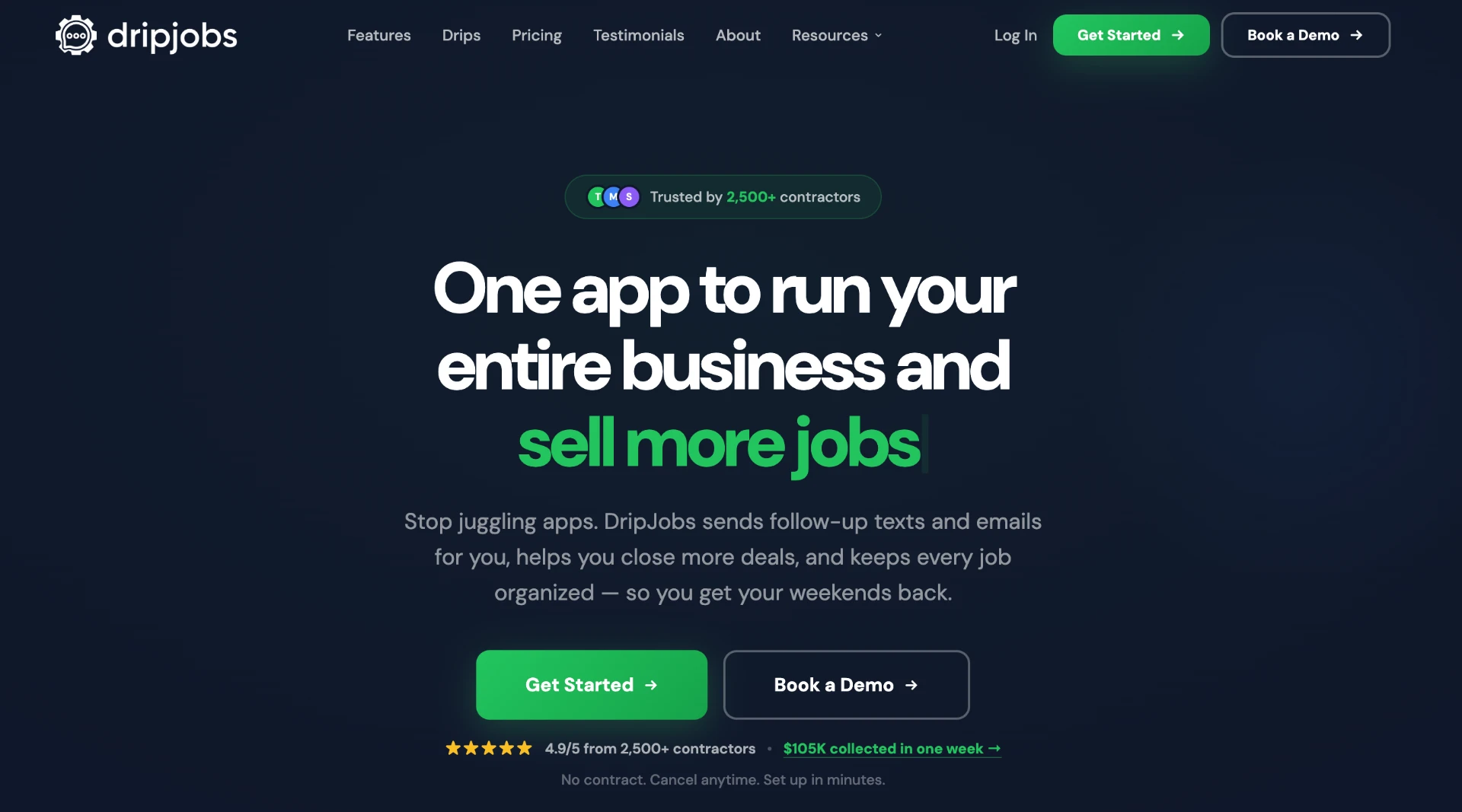
DripJobs sells a CRM built for contractors, mostly painters. It sends follow-up texts and emails, handles proposals and invoices, and takes payments. Its homepage says 2,500+ contractors use it.
Pricing is published. Pro is $97 a month and Advanced is $147 a month, each with one admin user. Growth, for larger teams with 5+ users and multiple locations, is priced by quote. Extra users and some features, such as job costing and Jobi AI, are paid add-ons. It's one of many field service tools whose customers can now try building their own.
What Happened?
On Nov 9, 2026, DripJobs cofounder Tanner Mullen described the problem in public:
"It has become increasingly common where current users of our software are building competing CRM's, with many of the same features and even some using direct copies of the UI / functionality and flow that is obviously unique to us. As they promote their product while it's in 'beta' they continue to use our product - so what is the right approach here?"
He asked three questions: keep serving them or refuse service, what is ethical, and where to draw the line. He didn't name the customers, and we haven't seen the copies, so this story covers the general question.
Is It Legal to Copy a Software Product?
It depends on what gets copied. US copyright protects code and creative expression. It does not protect "any idea, procedure, process, system, method of operation" under 17 U.S.C. 102(b). A follow-up sequence, a sales pipeline or an estimate-to-invoice flow is a method. Anyone can build one.
Courts have held that line for decades. In Lotus v. Borland (1995), an appeals court ruled the Lotus 1-2-3 menu structure was a method of operation and not protected. In Google v. Oracle (2021), the Supreme Court found Google's reuse of 11,500 lines of Java interface code was fair use.
Copying the actual code, images, icons or written copy is different. Those are protected expression. An AI tool told to "recreate this app" from screenshots can still produce copied text and graphics.
Can a Look and Feel Be Protected?
Sometimes, through trade dress. The Supreme Court held in Two Pesos v. Taco Cabana (1992) that a distinctive look can be protected without proving it built a reputation first. Software trade dress claims are hard to win, though. The owner has to show the look is distinctive, not functional, and that buyers are likely to confuse the two products.
For a contractor CRM, most screens are functional: a list of leads, a calendar, an invoice. A name, logo or color scheme close enough to cause confusion is the stronger claim.
What Do the Terms of Service Say?
This is often the vendor's strongest tool. Many SaaS agreements ban using the service to build a competing product, and many ban reverse engineering or copying the interface. A customer who agreed to those terms and then copies the product may be in breach of contract, even where copyright doesn't apply.
We haven't reviewed DripJobs' terms, so we can't say what they include. Vendors in this spot should read their own agreement first, because it decides most of their options.
Can a Vendor Refuse Service?
Generally yes, for business reasons. In the US, a private software company can usually end a customer relationship under its terms, as long as it isn't discriminating on a protected basis like race or religion and it honors refunds, notice periods and data export the contract promises. Building a competitor is a business reason.
Whether it should is a separate question. A customer building a copy is also a customer telling you something is missing, too expensive or too slow. Some of them will find that running their own CRM is more work than $97 a month.
What Should Vendors Do?
- Read your terms. Check for a no-competitive-use clause, a no-reverse-engineering clause and your termination rights. Add them at the next renewal if they're missing.
- Decide your policy once, in writing, so each case doesn't become a debate.
- Protect what is protectable: your name, logo, copy, images and code.
- Ask the copycats why they built it. Their answer is free product research.
- Compete on speed. A beta copy has to keep up with every release you ship.
What Should Builders Do?
- Build from your own workflow, not from someone else's screenshots.
- Don't reuse a vendor's text, icons, images or design system.
- Read the terms of any tool you still pay for before selling a competitor to it.
- Use a name that can't be confused with the product you're replacing.
Weighing a custom build in the first place? Our build vs. buy guide walks through the tradeoffs, and the Build vs. Buy estimator runs the numbers for your team.
This story is general information, not legal advice. Laws differ by country and state, and contracts differ by vendor. Talk to a lawyer about your situation.
DripJobs on HissingKitty
No bills yet
What teams pay
No ratings yet
Ratings
0
Alternatives listed
Built Something Like This?
List it free, or tell other teams what you pay today.